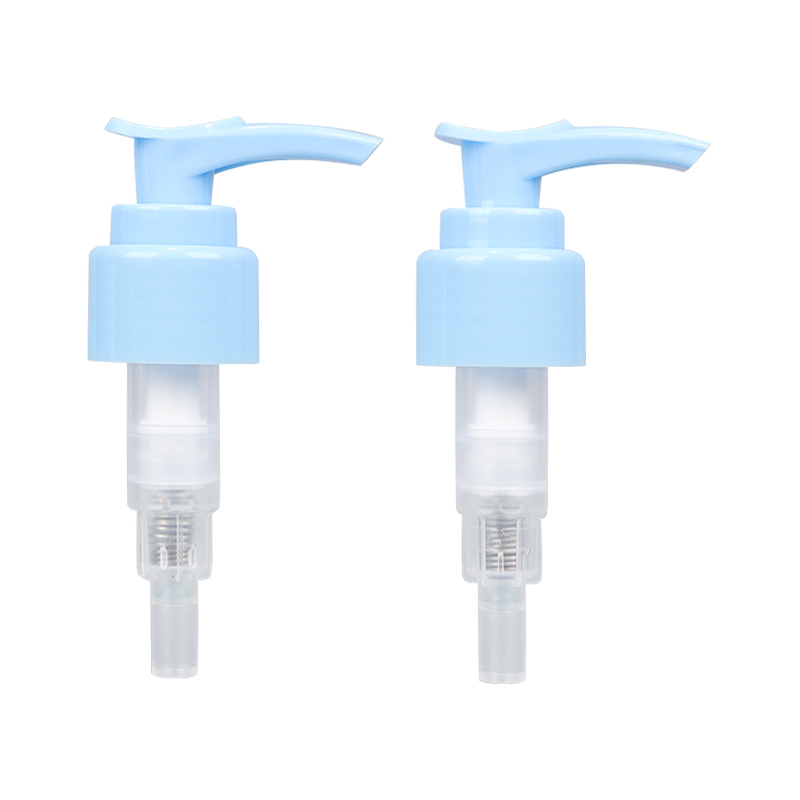
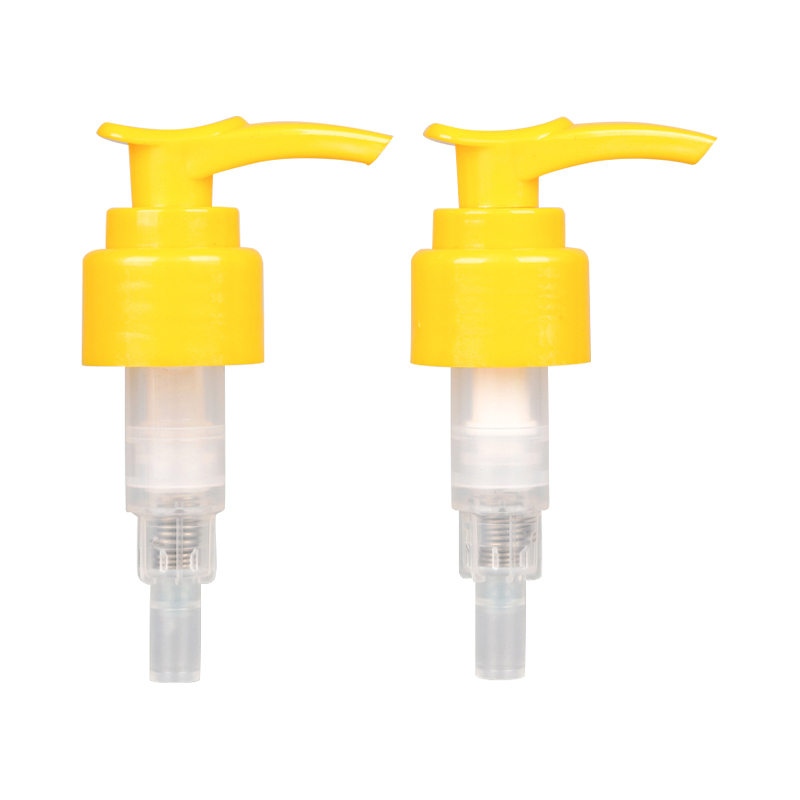
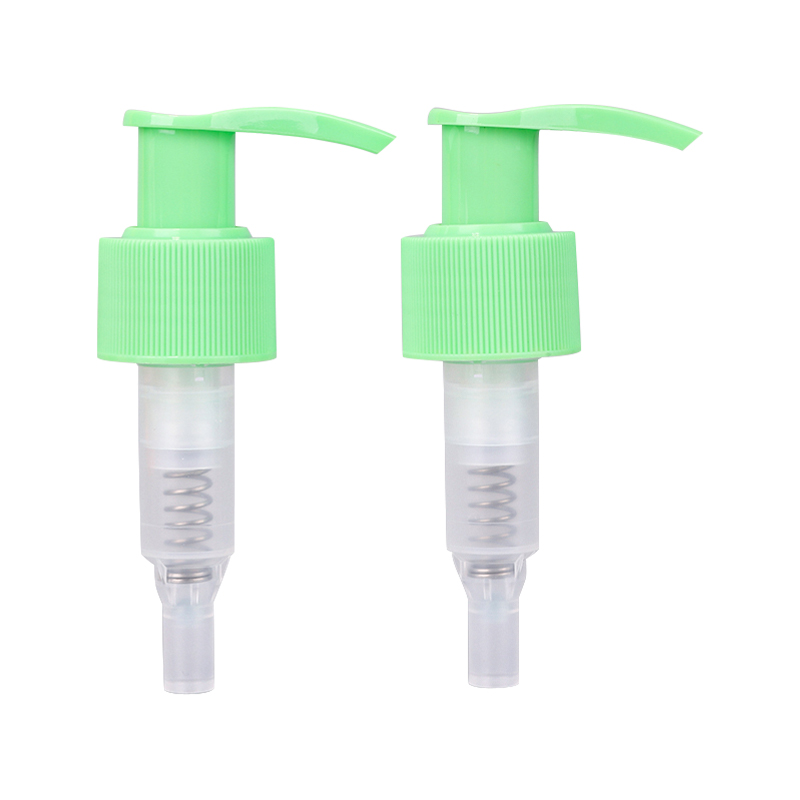
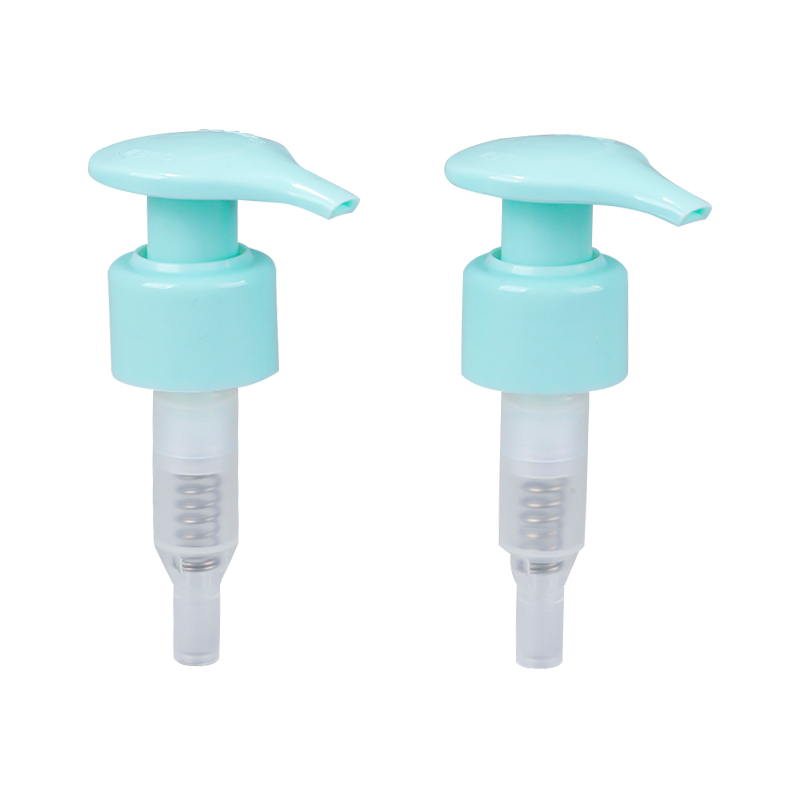
The packaging engineer once framed the trigger sprayer problem in a single question: "Can you remove the spring?" With a conventional trigger, the answer is no, not in a sorting facility and not by the consumer who just wants to throw the bottle away. Steel springs and mixed polymers are exactly why conventional trigger sprayers are rejected from recycling streams. A mono-material trigger sprayer removes that objection: every component, including the spring, is made from polypropylene, so the entire head can be recycled in the PP stream together with the bottle. For brands serious about recyclable packaging, that is the fundamental change to understand. This article explains what mono-material construction means for performance, sourcing, and real-world recycling outcomes.
What Is a Mono-Material Trigger Sprayer?
A mono-material trigger sprayer uses a single polymer family for all functional parts: the trigger, the housing, the nozzle, the dip tube, and the spring. In nearly all cases, that polymer is polypropylene, chosen for its chemical resistance, fatigue behavior, and compatibility with existing PP bottle recycling streams.
The defining feature is the spring. Conventional trigger sprayers use a steel or plated-metal coil spring to return the trigger after each squeeze. Mono-material designs replace it with a molded PP spring formed as part of the internal mechanism. This is not a cosmetic change; it changes how the sprayer is manufactured, tested, and ultimately disposed of.
Because the design contains no metal, the sprayer is lighter and cannot corrode when used with aggressive formulations. That benefit matters more than most buyers expect: rust particles from a conventional spring are a common cause of clogged nozzles in cleaner concentrates.
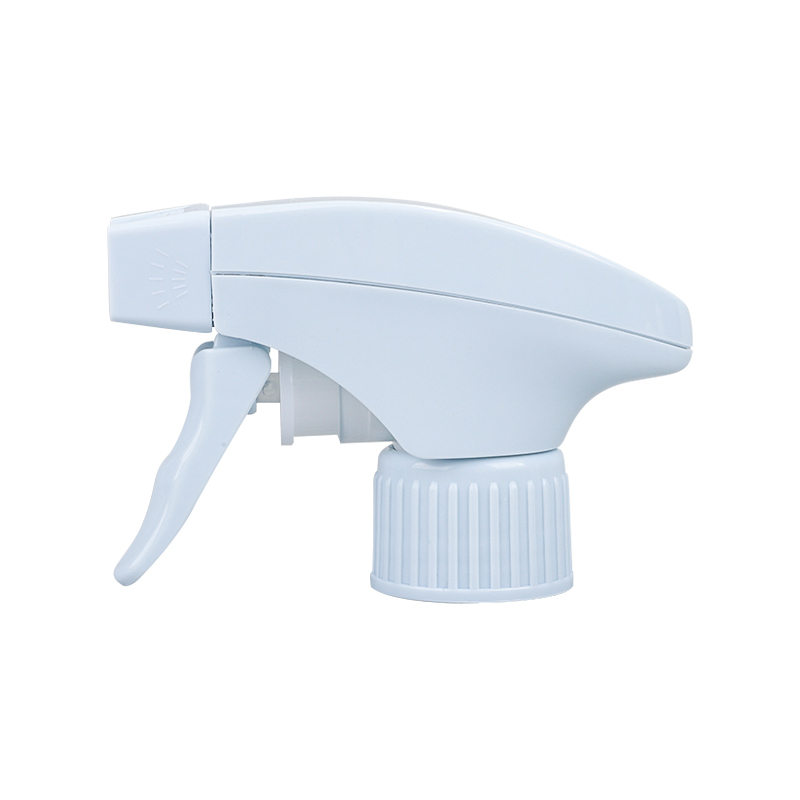
This is where EAED's trigger sprayer range starts. The all-plastic trigger sprayer is manufactured without any metal component, so it qualifies for mono-material recycling without hidden exceptions. It is also the configuration most brand owners specify first, because it covers the largest share of household and personal-care applications.
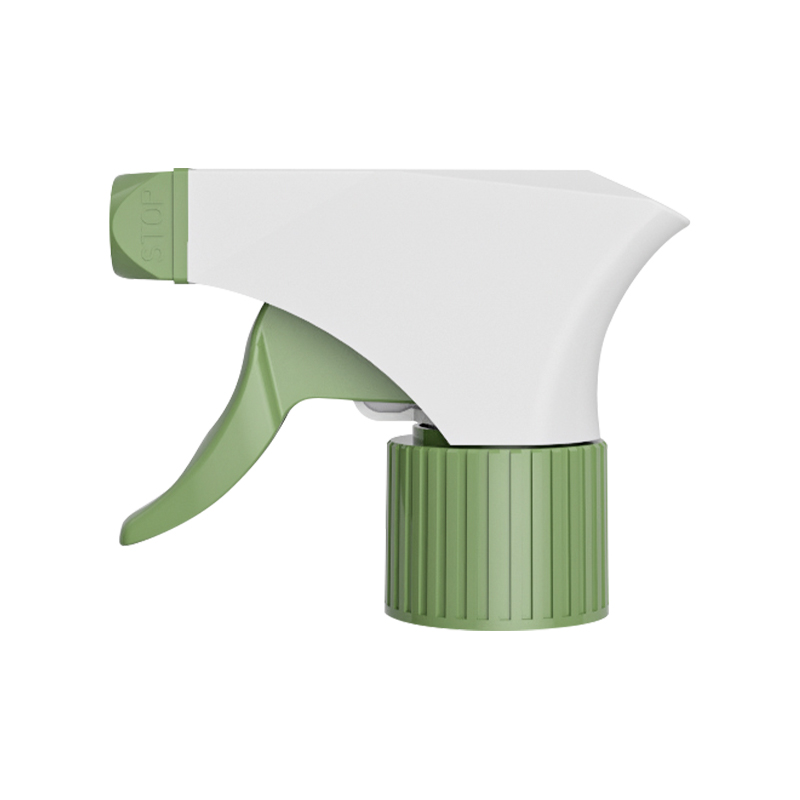 Wholesale All Plastic Trigger Sprayer Suppliers, Factory - Zhejiang Eaed Technol Zhejiang Eaed Technology Development Co., Ltd. is China wholesale All Plastic Trigger Sprayer factory and suppliers, All plastic trigger ... View Product →
 Why Mono-Material Design Matters for Recycling
The recycling industry works by polymer type, not by brand or product. A PP bottle with a PP trigger can be granulated, washed, and re-extruded into new packaging. A PP bottle with a conventional trigger cannot, because sorting systems cannot reliably separate the metal spring from the polymer.
Two practical consequences follow. Collection rates improve when the whole package can be recycled together, because consumers do not have to separate the trigger. Recycling quality improves because the input stream contains fewer contaminants, which is what recyclers measure when they certify a packaging format.
Regulation is accelerating this shift. The EU Packaging and Packaging Waste Regulation, for example, requires design-for-recycling to be demonstrated, and mono-material construction is the simplest way to satisfy that requirement for a dispensing closure. A growing number of brand owners now list mono-material or metal-free as a mandatory criterion in their packaging specifications.
That is why the sustainability argument has reversed in practice. Instead of asking whether a trigger sprayer adds recyclable value, the question is now whether it contaminates the recycling stream. A mono-material sprayer answers no.
Performance Without the Metal Spring
The most frequent objection to mono-material trigger sprayers is performance. Buyers assume a plastic spring cannot deliver the same output, durability, or spray quality as a metal spring. In our experience, the gap is much smaller than most people expect.
Molded PP springs are engineered around wall thickness, hinge geometry, and material grade selection. A well-designed PP spring can exceed 100,000 cycles without failure, which is longer than the usable life of most consumer trigger bottles. Output volume is determined by the pump chamber, not by the spring material, so a mono-material sprayer can match a conventional one on output per stroke.
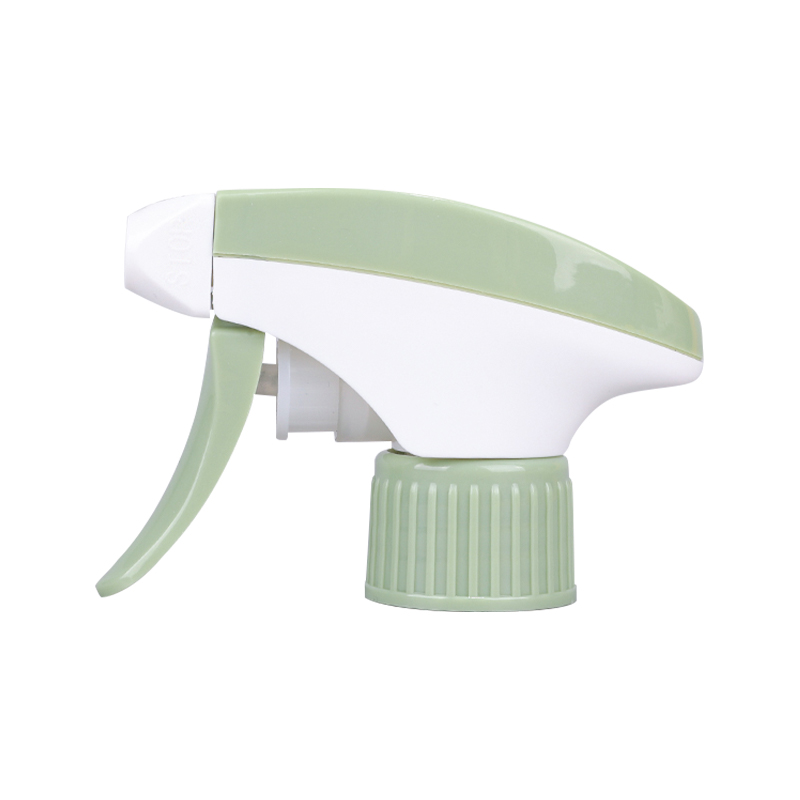
The differences to verify are specific. Spray pattern consistency matters near the end of the bottle's life. Suction recovery time matters when the bottle is nearly empty. Chemical compatibility matters when the formula contains solvents, oxidizers, or high-viscosity ingredients. EAED's metal-free spring trigger sprayer is a direct example: the PP spring is molded as part of the internal mechanism, and the design is cycle-tested before release. PP resists most household chemicals, but it is not universal, which is why compatibility testing against your exact formulation should always be part of the qualification process.
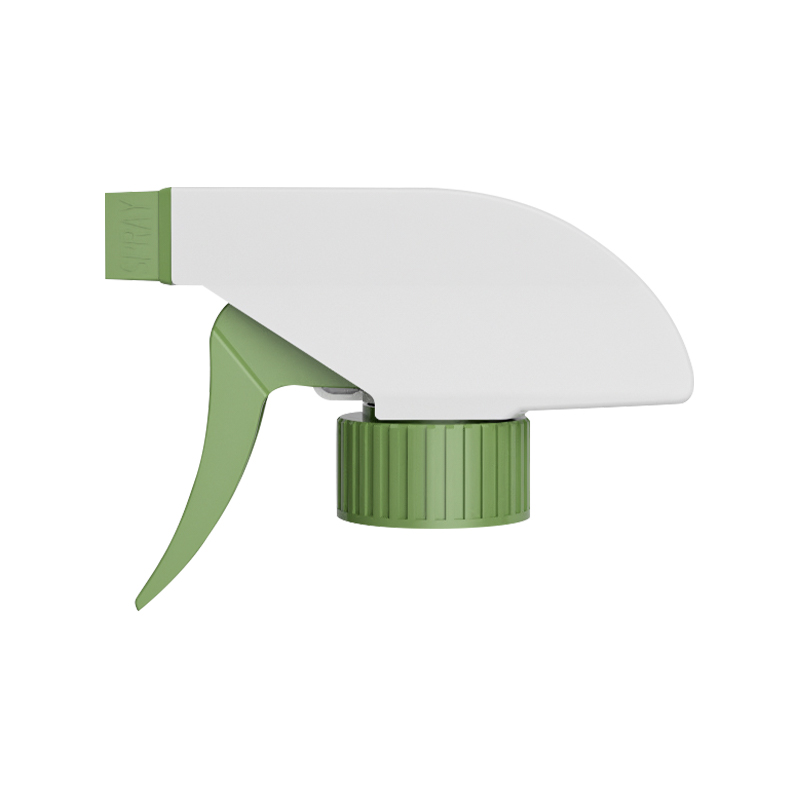 Wholesale Metal-Free Spring Trigger Sprayer Suppliers, Factory - Zhejiang Eaed T Zhejiang Eaed Technology Development Co., Ltd. is China wholesale Metal-Free Spring Trigger Sprayer factory and suppliers, Metal-free spr... View Product →
 What to Check Before Sourcing a Mono-Material Sprayer
Choosing a mono-material trigger sprayer is not a one-specification decision. We recommend evaluating six points before requesting samples.
- Neck finish and dip tube length. The 28/400 finish is standard for household cleaners, while personal-care bottles often use 24/410. Dip tube length must match your bottle; a tube a few millimeters short leaves product unreachable, and one that is too long curls and causes air suction.
- Output volume per stroke. Household trigger sprayers typically deliver between 0.8 and 1.5 ml per stroke. Multi-purpose cleaners usually need higher output, while fabric care may prefer a finer, more even mist.
- Spray pattern and nozzle type. A straight stream, a fan spray, and a foam nozzle are different products with different internal chambers. Switching nozzle type after tooling commitment is expensive, so define the pattern before you shortlist suppliers.
- Leak and pressure testing. A mono-material sprayer has no metal crimp, so it relies on the seal geometry of PP-to-PP contact. Some leaks appear only when the bottle is inverted or exposed to temperature swings during transport. Ask for the test data. A leakproof plastic trigger sprayer
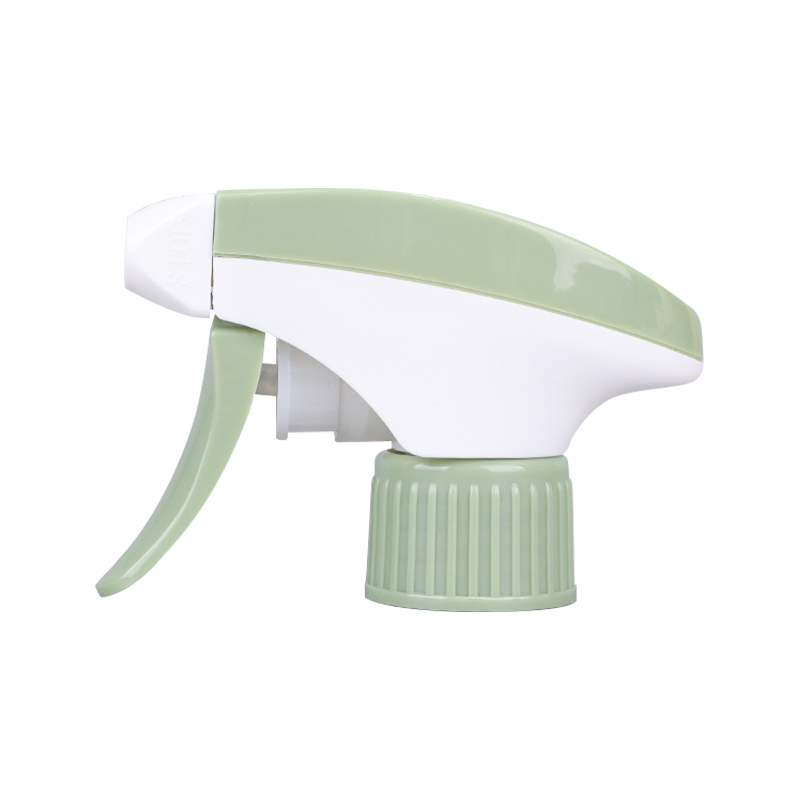 Wholesale Leak-Proof Plastic Trigger Sprayer Suppliers, Factory - Zhejiang Eaed Zhejiang Eaed Technology Development Co., Ltd. is China wholesale Leak-Proof Plastic Trigger Sprayer factory and suppliers, The leak-proo... View Product → with an integrated PP seal can pass those tests, but only if the seal geometry matches your bottle's finish.
 - Color and identification. Trigger heads are visible package elements. With in-house molding, colored PP can be produced without long lead times, which is a practical advantage when you need brand-matched or color-coded heads.
- Documentation. Ask for material certificates, recycling-stream classification, and cycle-test reports. If a supplier cannot provide them, the mono-material claim is not verified.
How conventional and mono-material trigger sprayers compare on the points that matter in procurement | Evaluation point | Conventional | Mono-material |
| Spring material | Steel coil | Molded PP spring |
| Recycling compatibility | Requires disassembly | PP stream, one piece |
| Corrosion risk | Possible with aggressive formulas | None |
| Weight | Heavier | Lighter |
| Typical output per stroke | 0.8-1.5 ml | 0.8-1.5 ml |
Where Mono-Material Sprayers Fit Best
Mono-material trigger sprayers work well in three main areas.
- Household cleaners. All-purpose, glass, kitchen, and bathroom formulas benefit from PP's chemical resistance and from a recycling story that matches the bottle.
- Personal care. Fabric care, pet care, and hair-care products that use trigger dispensing can be converted without changing the consumer experience.
- Industrial and institutional. Janitorial and sanitation products are diluted before use, so corrosion resistance extends the sprayer's service life and reduces replacement frequency.
The less obvious fit is aggressive formulations. Since PP resists most acids, bases, and alcohols, a mono-material sprayer can outperform a metal-spring sprayer in products that attack steel. Inverted configurations add another capability: when the bottle must spray upward or downward, an inverted pickup design prevents air suction. These examples show that the mono-material category covers multiple configurations rather than a single product.
Sourcing Considerations for Brands and Manufacturers
Sourcing a mono-material trigger sprayer means buying the engineering that proves it works, not just the component. The key questions to ask a supplier are whether they can show cycle-test data for the PP spring, what reject rate they run on automated assembly, whether mold design and tooling are in-house, and what documentation they provide for recyclability claims.
Suppliers with a full in-house chain, from mold design and injection molding to automated assembly, respond faster to design changes and adapt tooling when bottle dimensions shift. That is the model EAED follows, drawing on over 30 years of dispensing-pump manufacturing experience. The practical result is shorter sample lead times, more iterations per round, and fewer surprises at production scale.
Before mass production, run a simulated shipping test. A trigger that passes a bench test in one orientation can still fail in a carton. The practical trigger sprayer maintenance and environmental considerations we publish cover real usage data and give you a useful framework for writing your own test protocol.
Mono-material trigger sprayers are no longer a pilot concept. They are a proven packaging option that meets recyclability requirements while delivering the spray performance consumers expect. Evaluate spring design, output, chemical compatibility, and supplier capability, in that order. Start with the bottle and formula you will actually ship, test under realistic conditions, and choose a supplier who shows the data, not just the samples. That is how a mono-material trigger sprayer becomes a genuine packaging advantage instead of a sustainability checkbox.

 English
 русский
 Français
 Español
 italiano